Medical Battery
- Details
- Written by: Administrator
- Category: Medical Battery
- Hits: 381
Overview of the Philips HeartStart MRx
The Philips HeartStart MRx is a well-established Advanced Life Support (ALS) monitor/defibrillator designed for high-acuity medical environments. Widely deployed in emergency departments, intensive care units, operating rooms, and EMS ambulances, it integrates multi-parameter patient monitoring with manual and AED defibrillation, CPR feedback, and advanced ECG diagnostics.
In real-world emergency medicine, reliability is non-negotiable. While the MRx platform itself is recognized for robust performance, its effectiveness is fundamentally dependent on one critical consumable: the battery. Choosing a dependable Philips MRx battery is essential to ensure uninterrupted operation during life-saving interventions.
Clinical Performance and Technical Capabilities
Advanced Monitoring and Defibrillation
The HeartStart MRx features an 8.4-inch color TFT display capable of showing multiple ECG waveforms and vital signs simultaneously. It supports ECG, SpO₂, non-invasive blood pressure, EtCO₂, and temperature monitoring, with trend analysis and audible alarms.
Its biphasic truncated exponential defibrillation waveform automatically compensates for patient impedance, delivering effective shocks up to 200 joules in manual mode. In AED mode, the device provides intelligent shock advisories aligned with international standards. These capabilities make the MRx suitable for complex cardiac arrhythmias and prolonged resuscitation scenarios, where dependable power from a HeartStart MRx replacement battery is indispensable.
CPR Feedback and ECG Diagnostics
With support for 12-lead ECG acquisition and advanced diagnostic algorithms, the MRx assists clinicians in rapid STEMI identification and triage. Integrated CPR feedback technology provides real-time guidance on compression depth and rate, improving resuscitation quality. All of these functions rely on sustained battery output, reinforcing the importance of a high-quality Philips MRx battery during extended emergencies.
Practical Considerations in EMS and Hospital Use
Strengths in the Field
The MRx is valued for consolidating monitoring, defibrillation, and CPR support into a single device, reducing workflow complexity during critical events. Fast charging times and intuitive controls allow clinicians to focus on patient care rather than equipment management.
However, the unit’s weight and its classification as a mature-generation platform mean that ongoing maintenance planning is essential. In many regions, original accessories and power components have become harder to source, making a reliable HeartStart MRx replacement battery a practical and strategic procurement choice.
Power Reliability as a Risk Management Issue
Battery degradation is one of the most common failure points in emergency medical equipment. A compromised battery can limit monitoring time, delay defibrillation readiness, or interrupt data recording. Proactively replacing aging power modules with a tested Philips MRx battery helps mitigate operational risk and supports compliance with equipment readiness protocols.
Environmental Safety and Compliance
The HeartStart MRx is engineered for demanding clinical environments, with IP24 ingress protection and operating tolerances suitable for ambulance and hospital use. To maintain these safety standards, the battery must meet equivalent performance and reliability expectations. Selecting a purpose-built HeartStart MRx replacement battery ensures compatibility with the device’s electrical and environmental specifications.
Conclusion: Extending the Life of a Proven ALS Platform
The Philips HeartStart MRx remains a trusted solution for advanced cardiac life support across hospitals and EMS systems worldwide. While newer platforms continue to emerge, the MRx’s comprehensive feature set and proven clinical performance justify its continued deployment.
Ensuring uninterrupted readiness depends heavily on power integrity. Investing in a dependable Philips MRx battery or HeartStart MRx replacement battery is a cost-effective way to extend the operational life of this critical device, safeguard patient outcomes, and maintain confidence during the most time-sensitive medical emergencies.
For clinical engineers, procurement teams, and EMS managers, prioritizing battery replacement is not merely maintenance—it is a direct contribution to emergency care reliability.
- Details
- Written by: Administrator
- Category: Medical Battery
- Hits: 303
When a sudden cardiac arrest happens, every second matters. In those critical moments, an Automated External Defibrillator (AED) can mean the difference between life and death.
Among the many AED models available today, the Philips HeartStart FRx AED stands out for its durability, simplicity, and long-term reliability. Designed for demanding environments such as factories, airports, and sports facilities, the FRx has earned a reputation as one of the most dependable public-access defibrillators.
In this review, we’ll explore the design, performance, and maintenance requirements of the FRx AED—and why choosing the right replacement battery is essential for keeping it ready to save lives.
Built for Reliability in Any Environment
Unlike many medical devices that are designed primarily for hospitals, the FRx AED was created with real-world conditions in mind.
The device is frequently installed in locations where dust, moisture, or physical impact could damage ordinary equipment.
Key ruggedness features include:
-
IP55 water and dust protection
-
1.2 meter drop resistance
-
Crush resistance up to 500 kg
-
Operating temperature from 0°C to 50°C
Because of this, the FRx is commonly found in:
-
schools
-
industrial facilities
-
airports
-
sports stadiums
-
swimming pools
-
emergency response vehicles
Its durable design makes it one of the most trusted AED models for high-traffic public environments.
Simple Operation Anyone Can Follow
One of the biggest strengths of the Philips FRx AED is its extremely user-friendly interface.
During a cardiac emergency, even trained responders can experience stress. The FRx is designed to guide users step by step through the rescue process.
Once powered on, the device immediately provides:
-
clear voice instructions
-
visual LED indicators
-
CPR rhythm guidance
-
automatic heart rhythm analysis
The process is straightforward:
-
Turn on the AED
-
Attach the electrode pads
-
Follow the audio instructions
If a shock is needed, the device prompts the user to press the orange Shock button.
This simple workflow allows even people with minimal training to operate the device effectively.
Pediatric Capability Without Extra Pads
Another standout feature of the FRx AED is the Infant/Child Key system.
Many AED models require special pediatric electrode pads, which must be swapped during an emergency. The FRx takes a smarter approach.
By inserting the Infant/Child Key:
-
the AED automatically switches to pediatric mode
-
shock energy is reduced to 50 joules
-
voice instructions adjust accordingly
This saves valuable time during emergencies involving children.
Why the AED Battery Is So Important
While most people focus on the device itself, the battery is actually one of the most critical components of an AED.
AEDs must remain in standby mode for years while constantly performing self-tests. When a cardiac emergency occurs, the device must instantly deliver enough power for multiple defibrillation shocks.
The FRx uses the Philips M5070A lithium battery, which offers:
-
up to 4 years standby life
-
200 or more defibrillation shocks
-
around 4 hours of continuous operation
To maintain reliable performance, organizations often replace their power supply with the
Philips M5070A battery designed specifically for the FRx AED.
Because AED reliability depends heavily on the power system, using a certified
Philips M5070A battery ensures the device passes its automatic self-tests and remains emergency-ready.
For facilities that rely on public-access defibrillators, keeping a spare
Philips M5070A battery in storage is also considered best practice.
FRx Replacement Battery Performance
The FRx replacement battery is engineered for long shelf life and high reliability.
Unlike rechargeable batteries, the lithium manganese dioxide chemistry allows the battery to remain stable for years without losing performance.
AED maintenance teams often rely on the
FRx replacement battery because it provides consistent voltage output during both standby monitoring and emergency shocks.
Using a reliable
FRx replacement battery also helps ensure the AED can deliver its full energy capacity when a rescue situation occurs.
For organizations managing multiple defibrillators, stocking several
FRx replacement battery units can help avoid unexpected downtime.
How to Replace the Battery in a Philips FRx AED
Replacing the battery is quick and requires no technical training.
Step-by-step instructions
-
Turn off the AED
-
Flip the device over
-
Open the battery compartment
-
Remove the old battery pack
-
Insert the new battery
-
Wait for the automatic self-test to complete
-
Confirm the green Ready light is flashing
If the device shows a red indicator or emits a warning beep, further inspection may be required.
To maintain full compatibility and safety, it is recommended to install a certified
Philips HeartStart FRx battery designed for this AED model.
A high-quality
Philips HeartStart FRx battery helps ensure the device stays operational during long standby periods.
Facilities that operate several AED units often keep extra
Philips HeartStart FRx battery units available for quick replacement.
Recommended Maintenance Schedule
To ensure the FRx AED remains ready for emergencies, a basic maintenance schedule should be followed.
| Component | Replacement Interval |
|---|---|
| Battery | Every 4 years |
| Electrode Pads | Every 2 years |
| Device Inspection | Monthly |
Although the AED performs automatic self-checks, manual inspections are still recommended.
Cost and Ownership Considerations
The Philips FRx AED is positioned as a premium public-access defibrillator.
Typical costs include:
| Item | Average Price |
|---|---|
| FRx AED Device | $1300 – $1700 |
| Replacement Battery | $120 – $180 |
| Electrode Pads | $50 – $100 |
While the upfront cost may be higher than some alternatives, the durability and long service life often make it a cost-effective solution for organizations.
Final Thoughts
The Philips HeartStart FRx AED is built to perform reliably in environments where durability and simplicity are essential. Its rugged construction, clear voice guidance, and smart pediatric mode make it a top choice for public-access defibrillation programs.
However, like any emergency device, its reliability depends heavily on proper maintenance—especially battery replacement.
Ensuring the AED is powered by a dependable
Philips M5070A battery helps guarantee the device is ready when a life-saving shock is needed.
- Details
- Written by: Administrator
- Category: Medical Battery
- Hits: 55
The Philips HeartStart FRx AED has earned a strong reputation in the global AED market for one reason above all others: consistency.
While newer defibrillators continue adding cloud connectivity, touchscreen interfaces, and advanced analytics, the FRx remains focused on operational reliability under pressure. That philosophy has made it one of the most widely deployed AED systems in schools, factories, transportation systems, law enforcement fleets, and industrial facilities.
For organizations that prioritize dependable emergency readiness over feature-heavy platforms, the FRx continues to be a practical choice in 2026.
This guide explains:
- Why the FRx remains popular
- How to replace the battery
- Expected battery lifespan
- Maintenance considerations
- Whether the platform is still worth investing in today
Why the Philips HeartStart FRx Continues to Stand Out
Built for Non-Professional Responders
A major advantage of the FRx is its simplified emergency workflow.
The device was engineered around a straightforward assumption:
The first person responding to cardiac arrest may have no medical training.
To address this, the AED provides structured voice prompts covering:
- Electrode placement
- CPR guidance
- Safety warnings
- Shock delivery instructions
The system adapts prompts based on the user’s actions, reducing confusion during stressful situations.
The dedicated Help button is another notable design feature. When pressed, the AED repeats and expands guidance instructions, helping inexperienced users proceed more confidently.
Rugged Construction Designed for Public Deployment
Many AEDs perform adequately in office environments. The FRx was designed for harsher operating conditions.
Key durability specifications include:
- IP55 environmental protection
- Resistance to dust and water spray
- 1.2-meter drop tolerance
- High crush resistance
Because of this, the FRx is commonly installed in:
- Manufacturing facilities
- Outdoor sports venues
- Patrol vehicles
- Marine environments
- Security response kits
Among public-access AED platforms, the FRx is widely considered one of the most physically durable units available.
Philips HeartStart FRx Battery Replacement
Routine maintenance is critical for any AED, and battery replacement is one of the most important service tasks.
The official compatible battery model is the M5070A.
Users searching for replacement options often use terms such as:
These keywords are important for facilities managers, schools, and emergency equipment coordinators maintaining operational AED fleets.
How to Replace the FRx Battery
Battery replacement on the FRx is intentionally uncomplicated.
Remove the Existing Battery
Turn the AED over and open the rear battery compartment.
Remove the installed battery pack carefully.
Install the New Battery
Insert the replacement:
The battery should lock securely into place.
No tools are required.
Allow the AED to Perform Self-Testing
After installation, the FRx automatically performs internal diagnostics.
Confirm that:
- The Ready indicator is active
- No warning alarms are present
- The device completes startup normally
This automated testing process is one reason the FRx remains popular in public-access emergency systems.
Expected Battery Lifespan
Under standard standby conditions, the FRx battery typically supports:
- Approximately four years of standby operation
- Up to 200 shocks
- Several hours of continuous monitoring and operation
Actual lifespan depends on:
- Environmental conditions
- Frequency of self-tests
- Operational usage
- Storage temperature
Because the AED continuously monitors system status, using a reliable:
is important for maintaining emergency readiness.
Maintenance Advantages of the FRx Platform
The FRx is designed to minimize maintenance complexity.
The system automatically performs:
- Daily checks
- Weekly diagnostics
- Monthly system verification
These routines monitor:
- Battery condition
- Electrode connection
- Internal circuitry
- Calibration status
Compared with some enterprise-focused AED platforms, the FRx requires relatively little ongoing management.
For organizations operating multiple devices, this simplicity can significantly reduce maintenance workload.
Quick Shock Performance
The FRx includes Philips Quick Shock technology, allowing rapid shock delivery after CPR interruptions.
This capability is clinically important because reducing pauses during chest compressions improves resuscitation quality.
In practical use, the FRx generally transitions from rhythm analysis to shock readiness faster than many older-generation AED systems.
Pediatric Capability Without Dedicated Child Pads
One of the more practical FRx design decisions is its Infant/Child Key system.
Instead of requiring a completely separate pediatric electrode set, the FRx can switch into child treatment mode using a dedicated key.
When activated, the device automatically adjusts:
- Shock energy
- Voice prompts
- CPR guidance
This simplifies inventory management and improves deployment flexibility.
Limitations of the Philips HeartStart FRx
Although highly reliable, the FRx is not the most technologically advanced AED platform available.
Compared with newer competitors, it lacks:
- Real-time CPR depth monitoring
- Wireless fleet management
- Cloud synchronization
- Advanced data analytics
- Full-color displays
Organizations requiring enterprise medical integration may prefer systems from ZOLL or LIFEPAK.
However, for many public-access environments, operational simplicity remains more valuable than advanced telemetry features.
Is the Philips HeartStart FRx Still Worth Buying in 2026?
For many organizations, the answer remains yes.
The FRx continues to perform well in the areas that matter most during real emergencies:
- Reliability
- Ease of use
- Durability
- Fast deployment
- Minimal training requirements
Its long-standing presence in schools, industrial sites, and public infrastructure demonstrates continued confidence in the platform.
When combined with a dependable:
the FRx remains a highly capable public-access AED solution.
Final Assessment
The Philips HeartStart FRx is not designed to be the most feature-rich AED on the market.
Instead, it focuses on dependable operation in high-stress conditions where simplicity and reliability matter more than advanced software functions.
For public emergency response programs, that design philosophy continues to make the FRx one of the most trusted AED platforms available today.
- Details
- Written by: Administrator
- Category: Medical Battery
- Hits: 504
飞利浦 HeartStart FR2+ AED 是一款至关重要的救生设备,旨在为突发心脏骤停的患者提供紧急除颤。为确保您的 HeartStart FR2+ 随时可用,保持其电池处于最佳状态至关重要。本指南将引导您完成使用可靠的替换电池(如飞利浦 M3863A电池)安全地更换飞利浦 HeartStart FR2+ 电池的正确步骤。
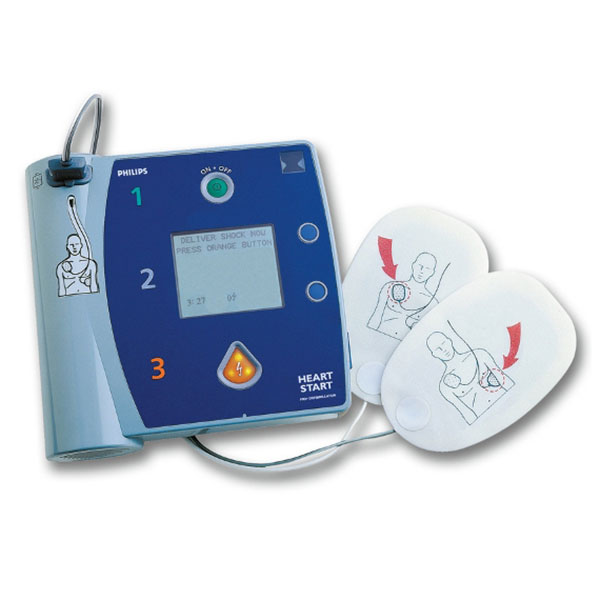
为什么电池维护至关重要
Philips HeartStart FR2+ 依靠非充电电池为其基本功能供电。由于此设备通常存放以备紧急情况使用,因此拥有一块新、高质量的电池可确保其在危急情况下可靠地运行。Philips M3863A替换电池是一个绝佳的选择,其设计符合或超越了原始规格。您可以在此处找到它。
电池更换分步指南
请仔细按照以下步骤操作,安全有效地更换飞利浦 HeartStart FR2+ 电池:
步骤 1:关闭设备电源
-
更换电池前,请确保 AED 已关闭。此步骤至关重要,可避免在更换电池过程中意外启动。
-
找到 FR2+ 上的开/关按钮并按下它来关闭设备。
步骤 2:找到电池仓
-
翻转 HeartStart FR2+ 即可看到后面板。
-
识别电池仓,通常标有电池符号,以便于识别。
步骤3:取出旧电池
-
用力按下电池仓盖上的释放闩锁。
-
小心地滑出旧电池并将其放在一边以便妥善处理。(请记住,飞利浦 M3863A 是不可充电电池,必须根据当地环境法规安全处理旧电池。)
步骤 4:插入新的飞利浦 M3863A 电池
-
从包装中取出新的飞利浦 M3863A电池。
-
将电池端子与电池仓内的相应触点对齐。
-
轻轻地将新电池滑入到位,直至其牢固地卡入。
步骤 5:执行电池自检
-
安装电池后,FR2+ 将自动进行自检。
-
观察设备的状态指示器;绿色的“就绪”指示灯亮起表示电池正常工作。
-
如果您看到红色警告灯或听到哔哔声,请重复安装步骤或查阅设备手册以获取故障排除指导。
步骤 6:更新维护记录
-
在 AED 维护日志中记录电池更换日期,以确保将来及时更换。飞利浦 M3863A电池通常可提供 4 年待机寿命,非常适合紧急情况下使用。
延长电池使用寿命的保养技巧
为了延长飞利浦 M3863A 电池的使用寿命并使 HeartStart FR2+ 保持最佳功能:
-
避免极端温度:将设备存放在 0°C (32°F) 至 50°C (122°F) 之间的阴凉干燥环境中。
-
定期进行自我检查:每月进行状态检查以确保设备准备就绪。
-
及时更换过期电池:即使未使用,AED 电池也会随着时间的推移而失去电量。请遵循制造商的更换间隔指南。
为什么选择飞利浦 M3863A 电池?
飞利浦 M3863A电池专为出色的性能和可靠性而设计。其特点如下:
-
4.2Ah 容量:确保紧急情况下持久电力。
-
12V 不可充电设计:可靠,可长时间待机使用。
-
认证的安全标准:符合 CE、UL、ROHS、ISO9001/9002 的安全操作。
为了获得可靠的电源解决方案,确保您的 HeartStart FR2+ 随时准备拯救生命,请考虑使用Batterie Star的高性能飞利浦 M3863A替换电池。
通过遵循本指南,您可以使您的飞利浦 HeartStart FR2+ AED 保持最佳状态,确保它能够应对分秒必争的紧急情况。